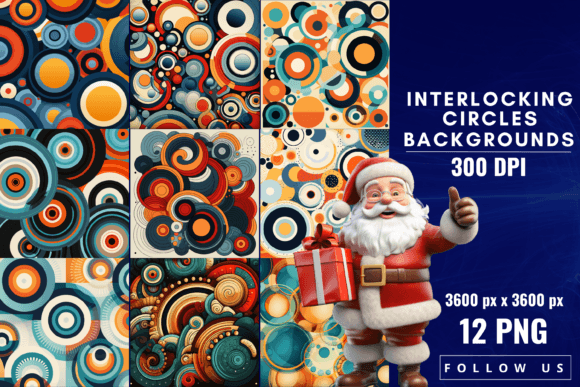
Interlocking Circles Backgrounds: A Modern Geometric Canvas
There's a particular kind of energy in a design that feels both structured and fluid. It’s the visual equivalent of a well-composed piece of music, where individual notes come together to form a harmonious whole. This is the essence of Interlocking Circles Backgrounds. At first glance, it's a pattern. But spend a moment with it, and you'll see it’s a dynamic system—a visual rhythm that can bring a sophisticated, contemporary edge to a wide range of creative work. It’s not just a static image; it's a starting point for a story.
The Anatomy of the Pattern: More Than Just Shapes
What makes these backgrounds so compelling? It’s the interplay of simplicity and complexity. Each circle is a fundamental, perfect shape. Yet, when they weave over and under each other, they create depth, movement, and a sense of connection. This isn't a flat, repetitive wallpaper. The interlocking effect generates a subtle three-dimensionality, a visual illusion that draws the eye inward. The personality of an Interlocking Circles Background is one of intelligent design. It communicates modernity, precision, and a clean aesthetic. It avoids the coldness of pure minimalism by introducing an organic, almost cellular quality through its repeating forms. This balance makes it incredibly versatile—it can feel tech-forward for a SaaS company or elegantly artistic for a boutique brand.
Where Geometry Meets Application: Practical Uses
The true test of any design asset is its utility. Where do these patterns shine? Consider their strength in establishing a strong brand identity. For a business that wants to project innovation, connectivity, or clarity—think consulting firms, tech startups, or architectural studios—an interlocking circles pattern used in website backgrounds, presentation templates, or business card textures can be transformative. It provides a consistent, recognizable visual language without relying on a specific serif font or sans serif font for its character.
In editorial design and packaging design, these backgrounds serve as a powerful, non-distracting foundation. Imagine a book cover for a modern fiction novel or a sleek product box for a premium skincare line. The pattern adds visual interest and a tactile quality, allowing typography and imagery to pop. For social media graphics, it’s a secret weapon. A feed filled with dynamic posts against an interlocking circles backdrop feels curated and professional, helping to build audience recognition and engagement. It turns a simple quote graphic or a product announcement into a piece of cohesive modern typography art.
Integrating the Pattern: A Designer's Perspective
Using a background like this effectively is about restraint and intention. It’s a strong visual element, so it needs to be balanced. One of the most effective approaches is to use it as a secondary layer. Let’s say you’re designing a landing page. Instead of a full-bleed background, use the Interlocking Circles pattern in a large, contained block behind a key call-to-action or a testimonial section. This creates a focal point and uses the pattern’s energy to guide the user’s eye.
When it comes to font pairing, the geometric nature of the circles provides a fantastic counterpoint. It pairs beautifully with clean, humanist sans serif fonts for a truly modern feel. The simplicity of the typeface allows the complexity of the background to breathe. For a more dramatic contrast, pairing it with an elegant script font or a handwritten font for headlines can create a striking balance between the mechanical precision of the pattern and the organic flow of the letterforms. The key is to ensure your chosen typeface has enough visual weight and clarity to remain readable against the pattern’s movement.
Evaluating and Implementing Your Background
Before you commit, treat it like any other design asset. First, consider your project’s core message. Does this pattern support the narrative of connection, innovation, or sophistication you’re trying to build? For a brand centered on rustic, handcrafted goods, it might feel out of place. For a creative font showcase or a digital art portfolio, it could be perfect.
Next, test it rigorously. Create mockups of your key deliverables—a website hero section, a social media post, a printed brochure cover. How does the pattern interact with your chosen color palette? Does it overwhelm your text? Adjust the opacity or use a color overlay to soften it if needed. Look at the file you receive; high-resolution versions are crucial for print work to maintain that crisp, intricate detail in the circles.
Finally, understand the licensing. If you’re using this for client work or commercial products, ensure you have the appropriate commercial license. A premium font or asset often comes with clearer, more robust licensing terms, which is essential for professional use. Think of it not as a cost, but as an investment in a reliable, high-quality component of your creative toolkit. By thoughtfully integrating Interlocking Circles Backgrounds, you’re not just filling space—you’re adding a layer of strategic visual communication that can elevate the entire perception of your work.