Magical Cute Cat Backgrounds: A Designer's Whimsical Toolkit
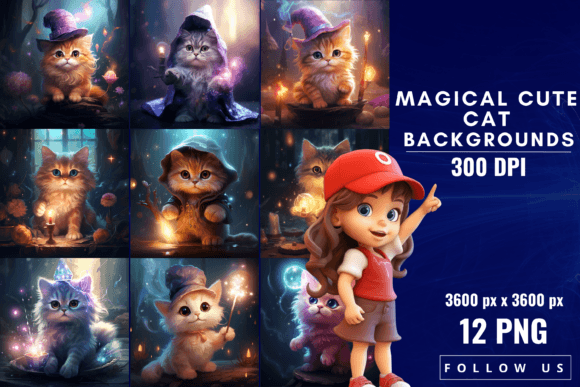
There's a specific kind of creative challenge that calls for more than just a clean layout or a standard color palette. It asks for personality, warmth, and a touch of narrative. When a project needs to connect on an emotional level—whether it's a small business brand, a personal blog, or a set of social media assets—the right visual backdrop can set the entire tone. This is where thoughtfully crafted Magical Cute Cat Backgrounds step in, offering a versatile foundation that blends whimsy with professional-grade quality.
More Than Just Cute: The Anatomy of an Effective Whimsical Asset
At first glance, the appeal seems simple: charming cats in enchanting scenarios. But the real value for a creator lies in the execution. These aren't generic clipart images. The backgrounds are designed with a cohesive visual style—think soft, harmonious color palettes, balanced compositions, and intricate details that hold up under scrutiny. The "magical" element might be a sprinkle of stars, a subtle aurora, or a cozy, fantastical setting, but it's done with restraint. This prevents the design from feeling childish and instead gives it a modern typography-adjacent sophistication, where the illustration style itself becomes a key part of the brand's visual language.
The personality is deliberately versatile. It can lean into playful innocence for a children's party planner's website, or it can adopt a more serene, storybook quality for a wellness blog or a boutique's packaging. The key is that the charm feels authentic, not saccharine. This allows it to serve as a creative font equivalent for your imagery—a display font for your background that communicates a specific mood instantly.
Strategic Applications: From Brand Identity to Daily Delight
Understanding where an asset works best is what separates good design from great strategy. Magical Cute Cat Backgrounds are surprisingly adaptable across multiple domains:
- Brand Identity & Logo Design: For pet-related businesses, bakeries, stationery shops, or indie authors, these backgrounds can become a core part of the brand identity. Used as a texture behind a logo, a pattern for business cards, or a website hero image, they instantly communicate a brand's friendly, approachable, and creative personality.
- Marketing & Social Media Graphics: In the scroll-stopping world of social media, a unique and consistent visual theme is crucial. These backgrounds provide a ready-made, recognizable style for Instagram posts, Facebook ads, Pinterest pins, and email headers. They help build visual consistency, making your content instantly identifiable in a crowded feed.
- Publishing & Editorial Design: Think beyond the obvious. A whimsical cat background can serve as a charming chapter header in a editorial design project, a unique texture for a book cover, or a decorative border for a newsletter. It adds a layer of visual interest that engages readers without distracting from the text.
- Digital & Print Projects: The applications extend to packaging design for small-batch goods, desktop and phone wallpapers, digital planners, printable greeting cards, and even web design elements like blog sidebars or loading screens. The high-resolution quality ensures clarity across both screen and print.
The influence on audience engagement is tangible. A well-chosen background does more than decorate; it sets an emotional tone. It can make a brand feel more professional yet personable, increase recognition through consistent use, and improve visual hierarchy by framing your core content—be it text, a product photo, or a call-to-action button—in an inviting context.
Practical Integration: Making It Work for Your Project
Adopting any new design asset requires a practical approach. Here’s how to evaluate and implement these backgrounds effectively:
- Evaluate Project Fit: Ask yourself: does the whimsical, magical tone align with my project's core message? It's perfect for projects that value creativity, warmth, and approachability. It might be less suitable for ultra-serious corporate or luxury minimalist contexts, unless used as a very subtle accent.
- Test with Your Core Elements: Don't view the background in isolation. Place your logo, your primary typeface (whether a serif font, sans serif font, or script font), and key imagery on top. Check for readability and contrast. The best backgrounds will complement, not compete.
- Consider Font Pairing: The style of the background suggests certain typographic partners. A clean, geometric sans serif font can provide a modern counterbalance to the whimsy. A elegant script font can amplify the storybook feel. Test a few combinations to find the right balance for your project's voice.
- Review Licensing for Your Needs: This is non-negotiable. Understand whether the license covers your intended use—personal, commercial, for digital products, or for physical merchandise. A clear commercial font (or asset) license is essential for any professional project to avoid future complications.
Ultimately, the goal is to use these backgrounds as a tool to serve your creative vision, not as a crutch. They are a starting point—a high-quality, stylistically cohesive starting point that can save hours of design time while elevating the final output. By integrating them thoughtfully, you can infuse your projects with a consistent, recognizable, and delightfully engaging charm that resonates with your audience. It’s about harnessing that adorable magic and directing it with purpose.