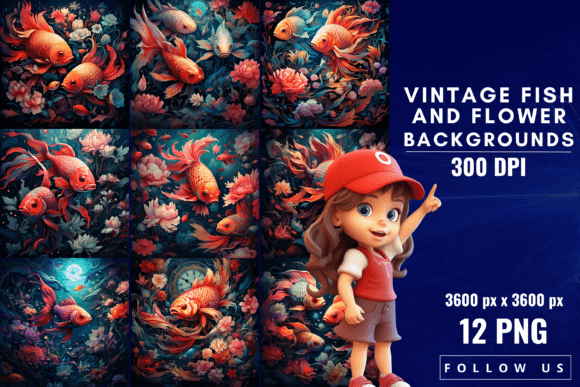
Unlocking Nostalgia with Vintage Fish and Flower Backgrounds
There is a specific kind of visual poetry that happens when you combine the fluidity of aquatic life with the grounded elegance of flora. Vintage Fish and Flower Backgrounds tap into a rich history of illustration, reminiscent of Victorian-era naturalist journals and decorative Arts and Crafts motifs. These are not just random images; they are curated compositions that bring a sense of calm sophistication to any project. If you are looking for a way to elevate your creative work beyond the flat, minimalist trends of the last decade, these backgrounds offer a textured, story-rich alternative.
The Aesthetic Appeal of Eclectic Nostalgia
At its core, the visual style of these backgrounds is defined by a juxtaposition of movement and stillness. You often see intricate line work typical of vintage illustration—perhaps a detailed carp or a playful trout—surrounded by blooming peonies or delicate ferns. The color palettes usually lean towards muted earth tones, sepia washes, or the faded pastels of old botanical prints. This "distressed" or aged look is incredibly useful because it immediately sets a tone. It tells the viewer that this content is established, thoughtful, and pays attention to detail.
For designers, this aesthetic solves a common problem: how to add depth without clutter. Because these are backgrounds, they provide a rich canvas that doesn't necessarily scream for attention but rather supports the foreground content. The organic shapes of the fish and flowers break up the rigid grid structures often found in modern web design and editorial design. They introduce a flow that guides the eye naturally across the page, making them a powerful tool for visual hierarchy.
Strategic Applications for Modern Projects
While "vintage" might sound like a niche category, the application of Vintage Fish and Flower Backgrounds is surprisingly versatile. In the realm of brand identity, these assets are gold for businesses that want to convey sustainability, organic origins, or artisanal quality. Imagine a high-end tea brand or a boutique skincare line; using these backgrounds on packaging or social media headers instantly communicates "natural ingredients" and "carefully crafted" without using a single word.
For content creators and bloggers, these backgrounds serve as excellent overlays for text-heavy graphics. If you are designing a quote card or a Pinterest pin, a busy background can sometimes make text unreadable. However, the vintage style often features enough negative space (especially when faded) to allow white or cream-colored typography to pop. This is where understanding font pairing becomes crucial. A bold, modern sans serif font placed over a delicate floral fish pattern creates a striking contrast that feels contemporary yet rooted in history.
Enhancing Print and Digital Collateral
Don't limit these assets to just digital screens. In print design, such as wedding invitations, menu designs, or stationery, these backgrounds add a tactile quality that standard digital photos cannot match. They mimic the look of letterpress or screen printing, which adds perceived value to the final product.
Furthermore, consider the psychological impact on your audience. The imagery of fish often symbolizes abundance and flow, while flowers represent growth and beauty. By incorporating Vintage Fish and Flower Backgrounds into your marketing materials, you are subconsciously signaling positive attributes to your customers. It creates a welcoming atmosphere that encourages the viewer to linger and engage with the content, whether it is an e-commerce banner or a physical brochure.
Practical Integration and Design Tips
When working with these backgrounds, the goal is harmony. You want the background to support your message, not overpower it. Here are a few practical guidelines for integrating them effectively:
- Typography Selection: Because these backgrounds are illustrative, avoid using overly decorative script fonts or handwritten fonts for body text. Instead, opt for a clean serif font for headings to match the vintage vibe, paired with a highly legible sans serif font for the body copy. This ensures readability while maintaining the aesthetic.
- Opacity and Layering: Don't be afraid to adjust the opacity. Lowering the opacity of the background to 20-30% can turn a busy pattern into a subtle texture. Alternatively, use a solid color overlay that matches your brand palette to unify the background with the rest of your design assets.
- Cropping for Focus: You don't always have to use the entire image. Zooming in on a specific cluster of flowers or a single fish can create an abstract texture that feels more modern. This is a great technique for social media graphics where square or vertical formats require specific focal points.
Ultimately, Vintage Fish and Flower Backgrounds are about bridging the gap between the organic world and digital creation. They provide a "premium" feel to projects that might otherwise look generic. By treating these backgrounds as a foundational element of your design rather than an afterthought, you can create visuals that are not only beautiful but also strategically effective in capturing and holding attention.